How to Fix Bullet Journal Mistakes Without Starting Over
Smudges, misspelled headers, crooked lines, wrong dates and layouts that do not work: practical ways to cover or redesign each one, and habits that prevent the next.
Bullet journal ideas, layouts and techniques
Original bullet journal layouts, trackers and simple decoration ideas, explained by structure so you can redraw them in any notebook with one pen and a ruler.
Set up a blank notebook in one evening: number the pages, then add a key, an index, a future log, a first monthly log and a first daily log. No decoration needed.
A notebook, one pen and a ruler are enough to begin. Learn how to choose notebook size, ruling and paper weight, and which extras are worth adding later.
How to set up a bullet journal index: how many pages to reserve, what to log and what to skip, plus grouped and color-coded versions and the basics of threading.
Smudges, misspelled headers, crooked lines, wrong dates and layouts that do not work: practical ways to cover or redesign each one, and habits that prevent the next.

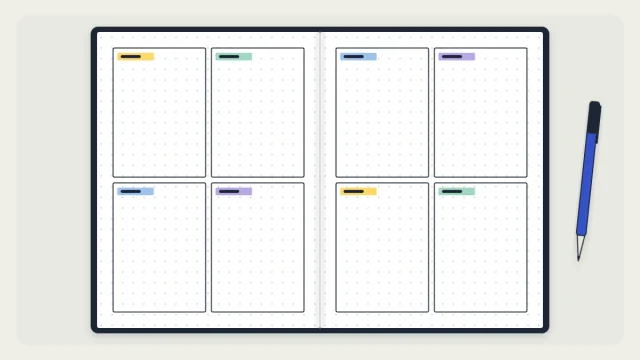
What a future log holds, when to check it and how to draw three simple versions: six boxes over two pages, a vertical timeline, and mini calendars with an event list.
What each bullet journal symbol means: the task dot, event circle and note dash, the four task states, signifiers, color coding, and how to keep your key short.
Three ways to lay out a day in your notebook: a rapid-log list, a time-blocked column and a tasks and notes split. Includes when dailies beat weeklies and how much space a day needs.
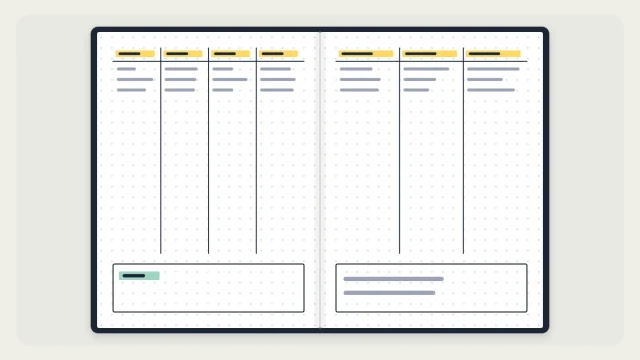
Three pared-back weekly layouts you can set up in a few minutes with one pen: seven rows on a page, margin day markers with a running list, and a two-column split.
Seven weekly layout structures, from vertical columns to a timeline strip, each with square counts for an A5 dot grid and a note on the kind of week it suits.
Draw a two-page weekly layout of eight equal boxes, seven days plus a notes box, on an A5 dot grid. Square counts, pencil guides, inking and headers are covered step by step.
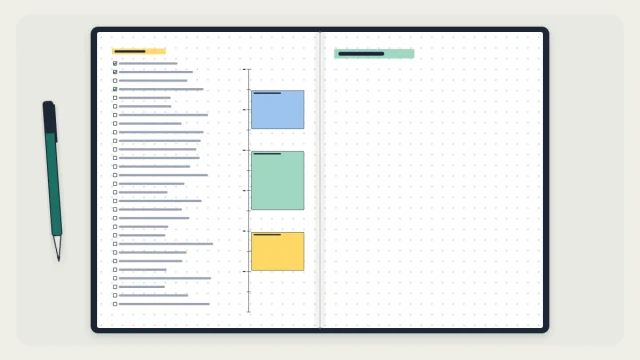
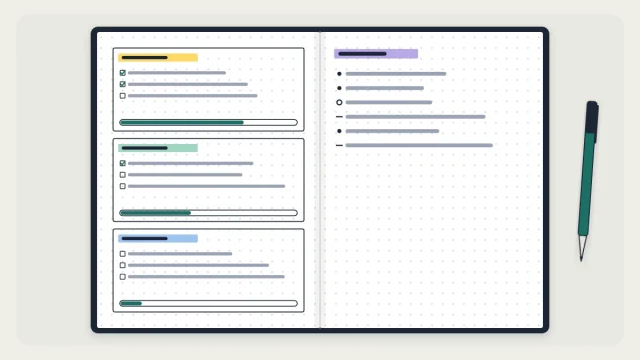
A one-page layout with three goal boxes, next-step checkboxes, progress bars and a month-end review strip, plus how to move each step into your weekly spread.
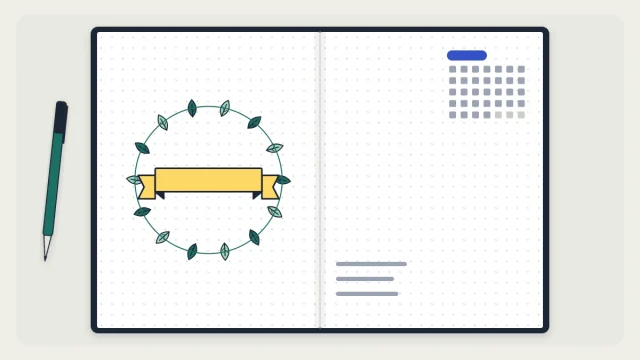
Five quick cover page concepts built from simple shapes, with square counts, rough timings and advice on fitting a mini calendar onto a single page.
Four monthly formats side by side: the classic day list, the calendar grid, week-by-week columns and a timeline strip. A pros and cons table helps you choose by how many dated events you have.
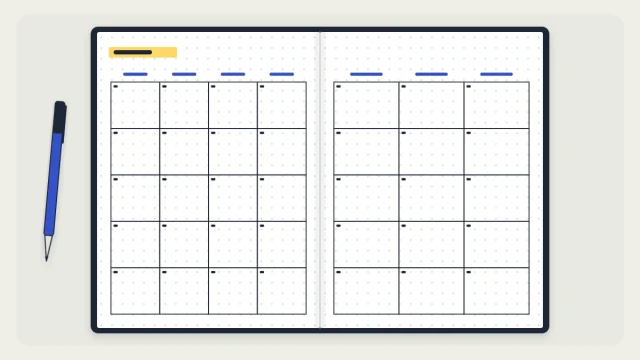
A step-by-step calendar grid across two A5 pages: how to count the squares, rule seven columns and five or six rows, add a header row and leave a sidebar for notes.
Plan household tasks with a weekly grid of days by task, room-by-room checklists, a daily, weekly and monthly frequency table and a seasonal list.
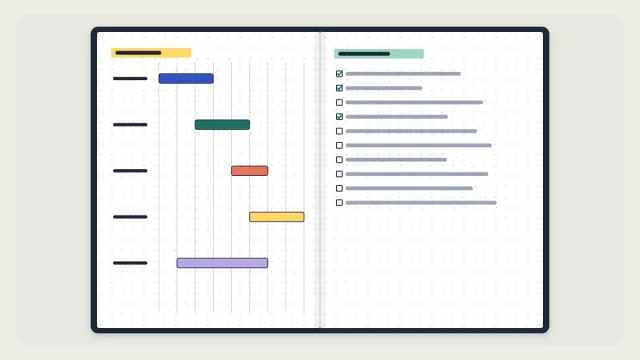
A two-page project layout with a goal box, phase bars on a week timeline, a milestone line and a next-actions checklist, plus a one-page version and a three-column board.
Four reading trackers for your bullet journal: a bookshelf to color in, a reading log table, a to-read list and a page-count bar, with steps for drawing book spines.
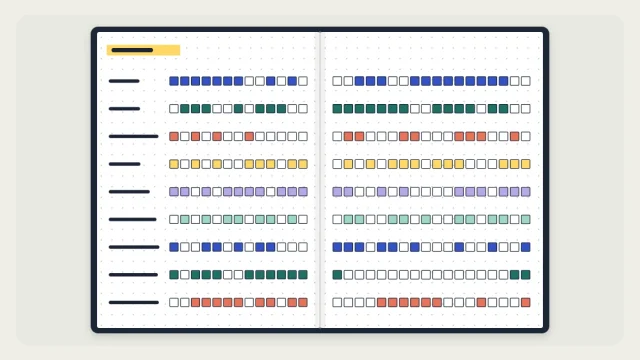
How to draw a monthly habit tracker grid step by step, plus a weekly mini tracker, ring and mini-calendar variants, and what to do with blank squares.
Pick a small bullet journal color palette that works: one neutral, one main color and one accent, with four example palettes, a swatch page and clear rules for keeping color coding apart from decoration.
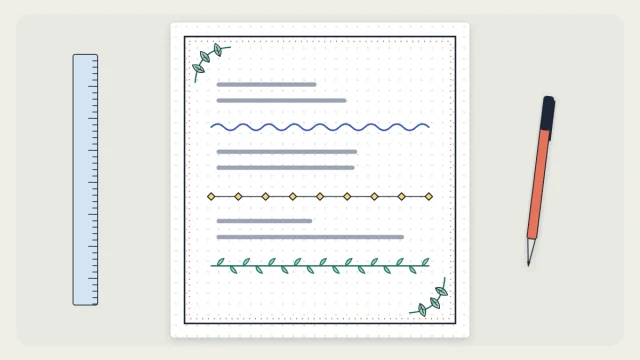
Eight divider lines and four corner decorations made from repeated dashes, dots, waves and leaves, with dot-grid spacing tips and a plain rule for when a divider actually helps a layout.
Six header styles that rely on shapes instead of handwriting skill, a ribbon banner drawn in four steps, a counting trick for centering and a three-level hierarchy for consistent pages.
Nine small doodles built from circles, rectangles and curves, a potted plant drawn in four steps and a set of tiny icons you can use as category markers in your notebook.
Original theme ideas for each season: three easy motifs built from basic shapes, a three-color palette, and the three places to use them so your regular layouts stay exactly as they are.
The order to set up a fresh notebook for a new year: index, key, year at a glance, future log, yearly goals and the first month, plus what to migrate from the old notebook and what to skip.
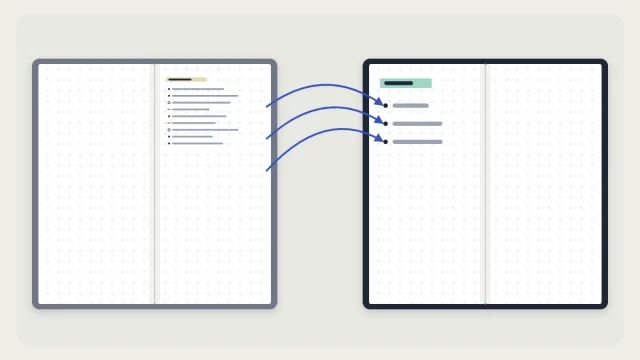
How migration works in a bullet journal: the monthly review step by step, the four decisions for every open task, why rewriting acts as a filter, and how to move into a new notebook.
A guide to pen types for bullet journaling, not brands: what fineliners, gel pens, brush pens and highlighters each do well, which tip sizes to pick, and how to test every pen on your own paper.
Ruler technique for dot-grid pages: count squares instead of measuring, divide a page into equal columns, keep ink from smearing along the edge and draw rows of boxes quickly.
Pick a small bullet journal color palette that works: one neutral, one main color and one accent, with four example palettes, a swatch page and clear rules for keeping color coding apart from decoration.
Start with a blank notebook and one pen, set up a few plain pages, and add structure only when you need it. Every guide on the site is free to read, no sign-up needed.