Best Pens for Bullet Journaling: Types, Tips and a Pen Test
A guide to pen types for bullet journaling, not brands: what fineliners, gel pens, brush pens and highlighters each do well, which tip sizes to pick, and how to test every pen on your own paper.
The best pens for bullet journaling are not a particular make or price point. They are the types that suit your paper, your handwriting and the job on the page. A pen that rules a crisp grid may be poor at filling a header, and the reverse is just as true.
So it helps to think in pen types and tip sizes first, then test what you own on the paper you actually write on.
Pen types at a glance
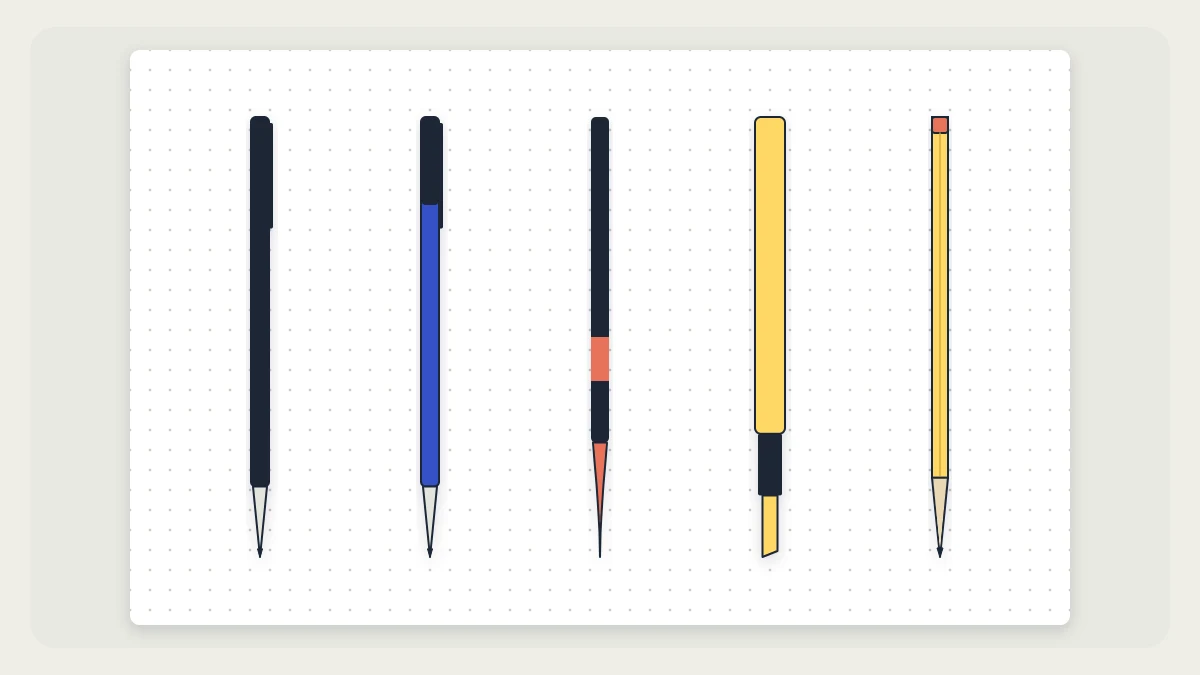
Six kinds of writing tool cover nearly everything a journal page asks for.
| Type | Best for | Keep in mind |
|---|---|---|
| Fineliner | Ruled lines, boxes, small neat writing | The felt tip wears down under heavy pressure |
| Gel pen | Everyday writing, smooth dark lines, color | Dries more slowly and can smear |
| Ballpoint | Quick notes, thin paper | Lines are lighter and less even |
| Brush pen | Large headers and lettering | Lays down a lot of ink, so it may show through |
| Highlighter | Color coding, fills, header swashes | Can drag the ink underneath it |
| Pencil | Guide lines and drafts | Smudges over time if left as final writing |
If you only want one pen, a fine-tipped fineliner or gel pen in black does the most. Everything else is an addition for a specific task.
Tip sizes in millimeters
Tip size decides whether your writing fits a 5 mm dot grid and how firmly your boxes stand out from the text inside them.
- 0.1 to 0.2 mm: tiny details, small tracker grids and numbers in a mini calendar. Can feel scratchy for long writing.
- 0.3 to 0.4 mm: the all-rounder. Fine enough for one line of writing per square, strong enough for ruled lines.
- 0.5 mm: box outlines, day labels and bolder everyday writing.
- 0.7 to 0.8 mm and up: thick borders, underlines and titles.
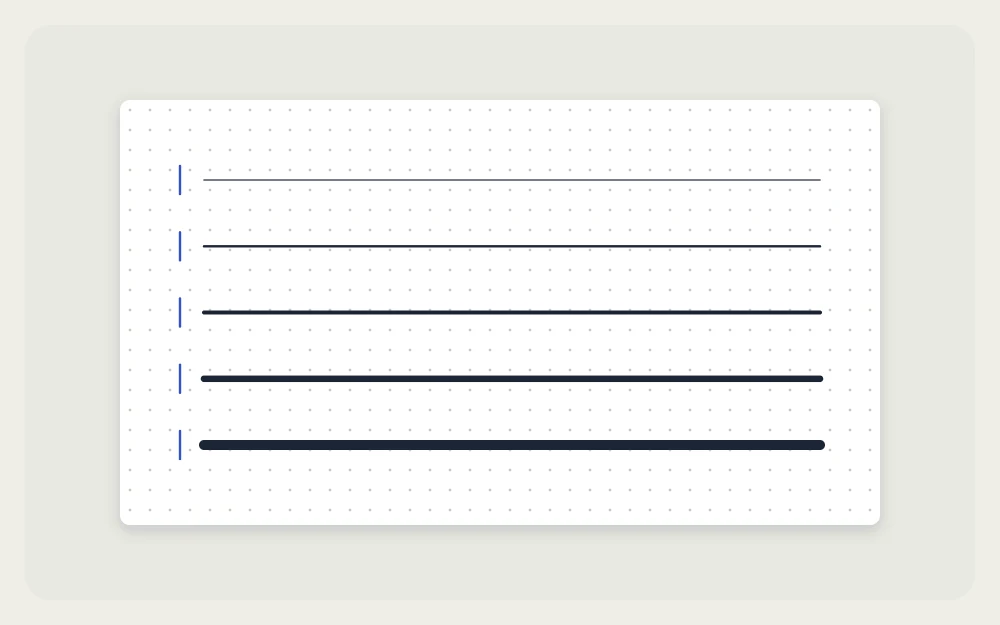
The number describes the tip, not always the line. A 0.5 mm gel pen and a 0.5 mm fineliner often leave lines of different widths, so compare them on paper instead of trusting the barrel.
A practical pairing is one fine pen for writing and one thicker pen for structure. Boxes drawn in 0.5 mm with entries in 0.3 mm read clearly without any color at all.
Ghosting, bleeding and paper weight
Three words describe what ink does on the wrong paper:
- Ghosting: a faint shadow of your writing is visible from the other side of the page. The ink has not come through; the paper is simply thin enough to see it.
- Bleeding: ink soaks through and leaves marks on the back of the page, or even on the next sheet.
- Feathering: ink spreads sideways into the paper fibers, so a line looks fuzzy at the edges.
Paper weight, measured in grams per square meter (gsm), is the first thing to check. Everyday notebook paper is often around 80 gsm and ghosts with most pens. Notebooks made for journaling commonly use heavier paper, from about 100 gsm up to 160 gsm, which holds wetter inks better.
Weight is not the whole story, because coating and fiber also change how ink behaves. Two notebooks of the same gsm can treat the same pen differently. The page on bullet journal supplies covers how to weigh paper against notebook size and ruling.
Pigment ink versus dye ink
In general terms, pigment ink carries tiny solid particles that settle on the surface of the paper. Once dry, it tends to resist water and fading. Dye ink is colorant dissolved in liquid, which soaks into the fibers. It comes in a wide range of bright colors but is usually less water-resistant and more likely to feather on absorbent paper.
This matters most when you layer. A water-based highlighter drawn over dye or gel ink can pull the writing into a gray streak, while a dry pigment fineliner usually stays put. Barrels are often labeled “pigment,” “waterproof” or “water-resistant,” which is a useful hint, though your own test is the real answer.
Tip
If a pen smears under highlighter, reverse the order: lay the highlight down first, let it dry, and write on top of it.
How to make a pen test page
A pen test page shows how each pen behaves on this notebook’s paper. Put it on the last page, where show-through will not spoil a spread.
- Rule a row about 3 squares tall for each pen, with a narrow column on the left for its type, color and tip size.
- Draw a short straight stroke, then a wavy line, to see the pen at both slow and fast speeds.
- Fill a swatch square of 2 by 2 squares. Solid fills reveal bleeding that single lines hide.
- After roughly five seconds, brush a fingertip across the end of the stroke to check drying time.
- When everything is dry, run a highlighter over part of each line.
- Turn the page and look at the back. Mark each row with your own rating: clean, ghosts or bleeds.
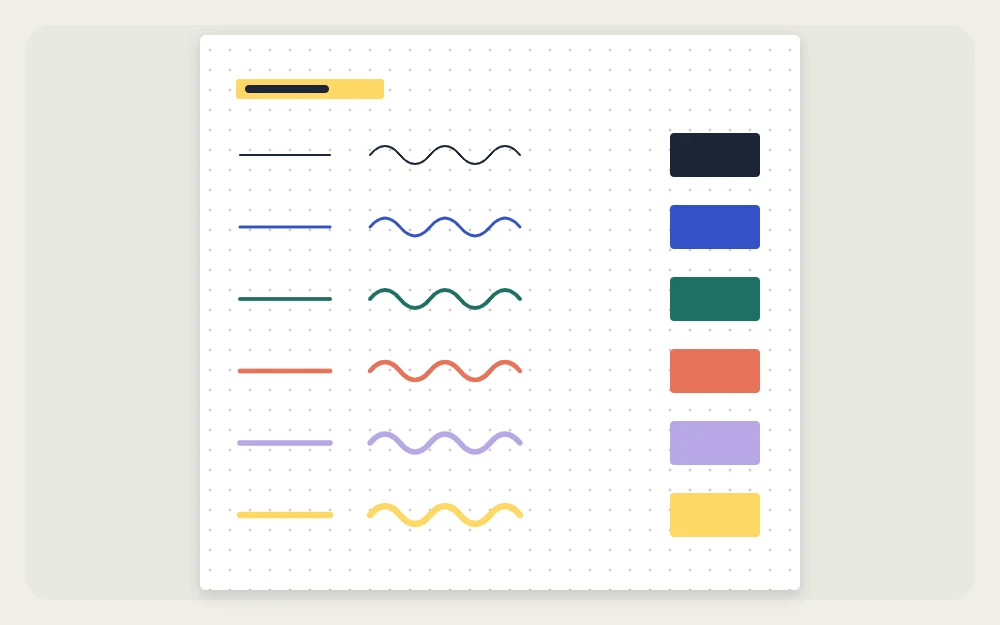
Add a row whenever a new pen joins your case. The same page works for color planning, as described in bullet journal color palettes.
Building a small kit that covers everything
Start with what passes the test, then fill gaps in this order:
- One fine black pen, about 0.3 mm, for writing and thin lines.
- A pencil and eraser for guides.
- One thicker black pen, 0.5 to 0.8 mm, for boxes and borders.
- One or two mild-color highlighters for headers and coding.
- A brush pen, only if you enjoy lettering.
You can skip the brush pen entirely: the shape-based styles in bullet journal headers need nothing more than a fineliner and a highlighter. If you write left-handed or tend to rest your hand on the page, favor quick-drying options such as ballpoints and fine gel pens, and let ruled lines dry before you move on.
Frequently asked questions
What tip size is best for writing on a 5 mm dot grid?
Around 0.3 to 0.4 mm suits most handwriting on a 5 mm grid, because letters stay clear inside a single square. Go finer, to about 0.2 mm, for very small writing or mini calendars, and use 0.5 mm or thicker for box outlines and titles.
How can ghosting be reduced without buying a new notebook?
Switch to a finer tip and a drier ink, such as a ballpoint or a fine fineliner, and press lightly. Avoid large solid fills and brush pens on that paper. Some people also use only the right-hand pages for heavier ink, or place decoration where the reverse side holds a header.
Are fineliners or gel pens better for a bullet journal?
Neither is better overall. Fineliners give even, precise lines and work well against a ruler, so they suit layouts and small writing. Gel pens glide more easily and give dark, smooth writing, but dry more slowly. Many journals use a fineliner for structure and a gel pen for daily entries.