Reading Tracker Ideas: Bookshelf Pages, Logs and Lists
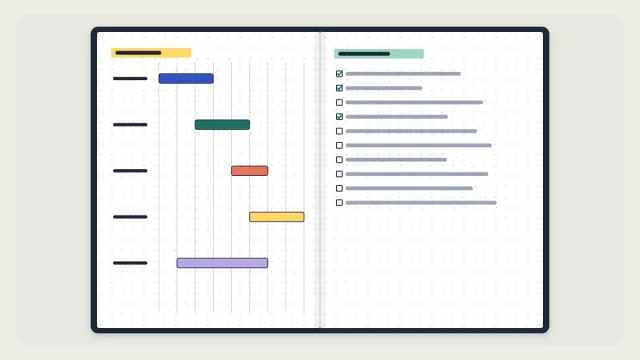
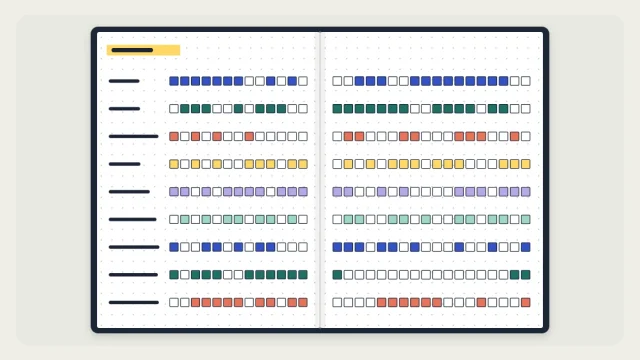
Four reading trackers for your bullet journal: a bookshelf to color in, a reading log table, a to-read list and a page-count bar, with steps for drawing book spines.
Tutorial at a glance
Materials
- Fine black pen
- Pencil and eraser
- 6-inch (15 cm) ruler
- Colored pencils or mild-color highlighters
These reading tracker ideas cover four jobs a bullet journal can do for your books: show at a glance what you have finished, keep the details of each title, hold the list of what to read next, and follow your progress through a long book. You can use one of them or combine all four on a spread.
None of the layouts needs drawing skill. Book spines are rectangles, a log is a table and a progress bar is a strip of squares, so a ruler and one pen will carry you through the whole page.
Pick the tracker that fits how you read
| Tracker | What it records | Space needed |
|---|---|---|
| Bookshelf | How many books you have finished | One page |
| Reading log | Title, author, dates and your rating | One or two pages |
| To-read list | Books you want to read next | Half a page or more |
| Page-count bar | Progress through one book | Two or three rows |
A reading tracker is a collection: a topic page that sits outside your dated logs and fills up over months. If that idea is new, the overview of bullet journal collections explains how such pages work alongside daily and monthly logs.
The bookshelf page
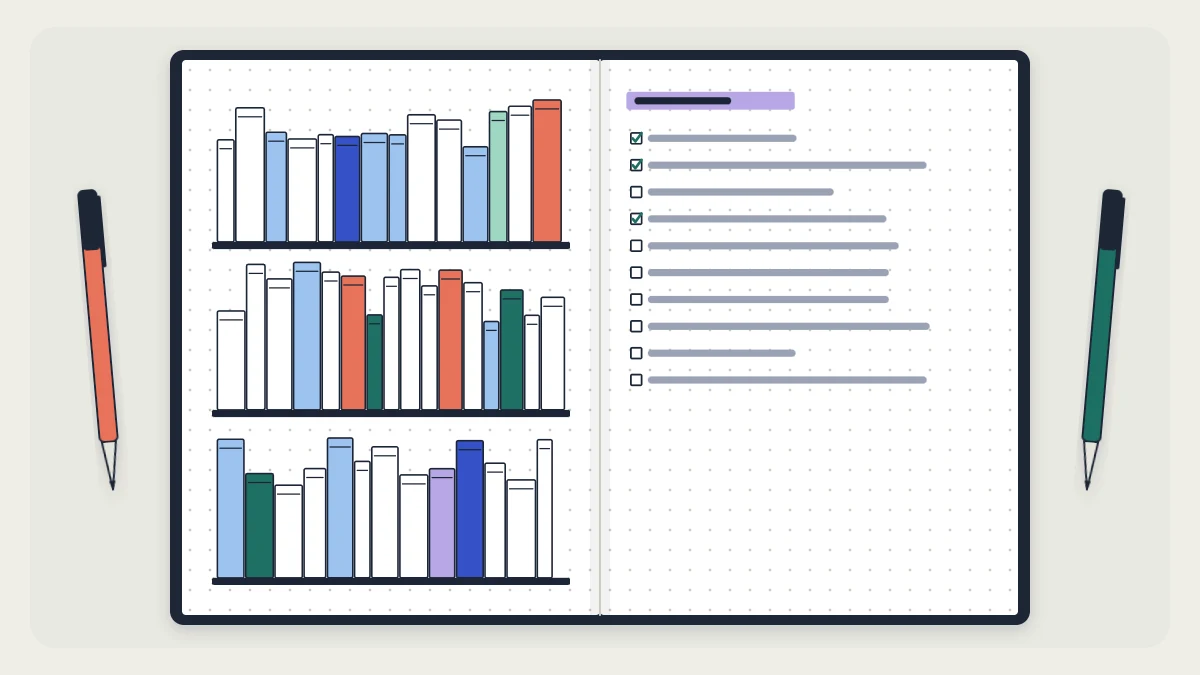
A bookshelf tracker is a page of empty book spines that you color in as you finish each book. It is the most visual option and the quickest to read back.
Plan three or four shelves on an A5 page. On a page roughly 26 squares wide and 38 tall (count your own, since notebooks vary), three shelves of 10 squares each, with a header on top and a shelf line under each row, fill the page well. With spines 2 to 3 squares wide, one shelf holds about 8 to 10 books, so the page has room for roughly 25 to 30 titles.
Write the title along each spine when you finish the book, turning the notebook sideways, or number the spines and keep the titles in a log.
How to draw book spines with a ruler
- Rule the shelf lines first, the full working width of the page. Make each a double line, 1 square apart, so the shelf looks like a board.
- Starting at the left of the bottom shelf, pencil a rectangle 2 squares wide and 8 squares tall, standing on the shelf line.
- Draw the next spine right beside it, sharing the side line. Change the size: 3 squares wide and 6 tall, then 2 wide and 9 tall, and so on.
- Vary heights between 5 and 9 squares and widths between 2 and 4 squares. Uneven tops are what make the row read as books.
- Every five or six books, lean one. Draw a rectangle at a slight angle resting against its neighbor, or stack two or three flat rectangles lying on their sides.
- Add one or two short horizontal bands near the top and bottom of some spines for detail.
- Ink the lines with a fine pen, let the ink dry and erase the pencil.
The dot grid does most of the measuring here. If you want more speed, the guide to using a ruler in a bullet journal shows how to draw rows of boxes quickly by counting dots.
The reading log table
A log holds the details the bookshelf cannot. Turn it into a table with one row per book and these columns:
- Title and author: the widest column, about 12 squares.
- Started: a date box 3 squares wide.
- Finished: another date box 3 squares wide.
- Rating: five small star outlines, about 6 squares in total.
Make each row 2 squares tall so the title has room. On a page 38 squares tall, with a header and a row of column labels, that gives you about 16 or 17 books per page.
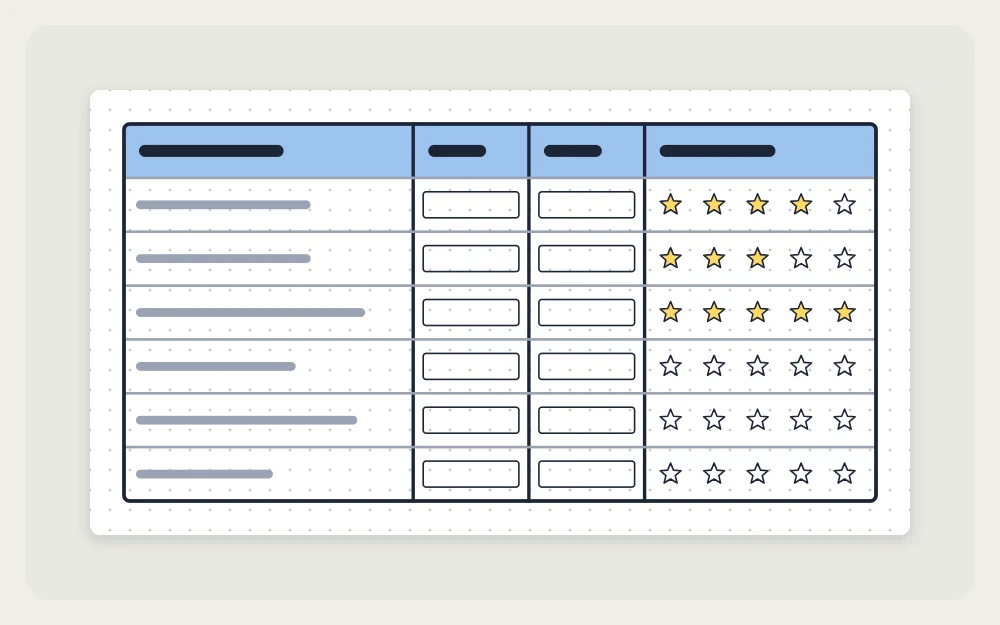
The stars are your own rating, so decide once what they mean to you and write it at the bottom of the page. For example, five stars might mean “would read again” and three “worth reading once”. A fixed scale keeps ratings from the start and end of the year comparable.
The to-read list
The simplest tracker is a checkbox list. Write each title on its own line with a small box in front, and tick the box when the book moves to your log. Leave the right margin free for a short note on where the recommendation came from or whether you own the book, need to borrow it or have it on hold at the library.

This list grows faster than you read, so give it a full page, or split one page into two columns. When it is full, start a new list on the next free page and connect the two by writing each page number at the bottom of the other. Add both to your bullet journal index so they are easy to find.
The page-count bar
For a long book, a progress bar shows how far in you are. Draw a strip 20 squares long and 1 square tall, and divide it into 10 segments of 2 squares. Each segment stands for one tenth of the book. For a 400-page book, that is 40 pages per segment; write the page numbers 40, 80, 120 and so on in small figures under the dividing lines.
Color a segment each time you pass its page number. The bar fits under a row of the log, at the bottom of the bookshelf page or in the corner of a weekly spread while you are reading that title.
Color and paper notes
Bookshelf pages use a lot of color, and heavy coloring is where thin paper shows its limits. Mild highlighters and colored pencils are gentle on most pages; alcohol-based markers tend to bleed through. Test on a back page first, and see the notes on ghosting and bleeding in the guide to pen types for bullet journaling.
A color code adds a second layer of information without extra writing. You might use one color for fiction, another for nonfiction and a third for rereads. Three or four colors are plenty.
Frequently asked questions
How many books fit on a bookshelf tracker page?
On an A5 dot-grid page with three shelves and spines two to three squares wide, you can fit roughly 25 to 30 books. Narrower spines or a fourth shelf add more. If you run out of room, draw a second bookshelf on the next free page and note it in your index.
What columns should a reading log have?
A useful minimum is title and author, the date you started, the date you finished and your own star rating. Optional extras include the format, the page count or a one-line note. Keep the title column widest and make rows two squares tall so longer titles fit.
Can I track audiobooks and ebooks in the same reading tracker?
Yes. Treat every finished title the same way and mark the format with a letter, a small icon or a color: for example one color for print, one for ebooks and one for audiobooks. Add a small legend to the page so the code stays clear later.